The Blue Checkmark Lost Because It Was Never Infrastructure
Meta Verified sells the blue tick. The EU mandates digital identity wallets by end of 2026. Neither system solves the actual problem of verified human identity.
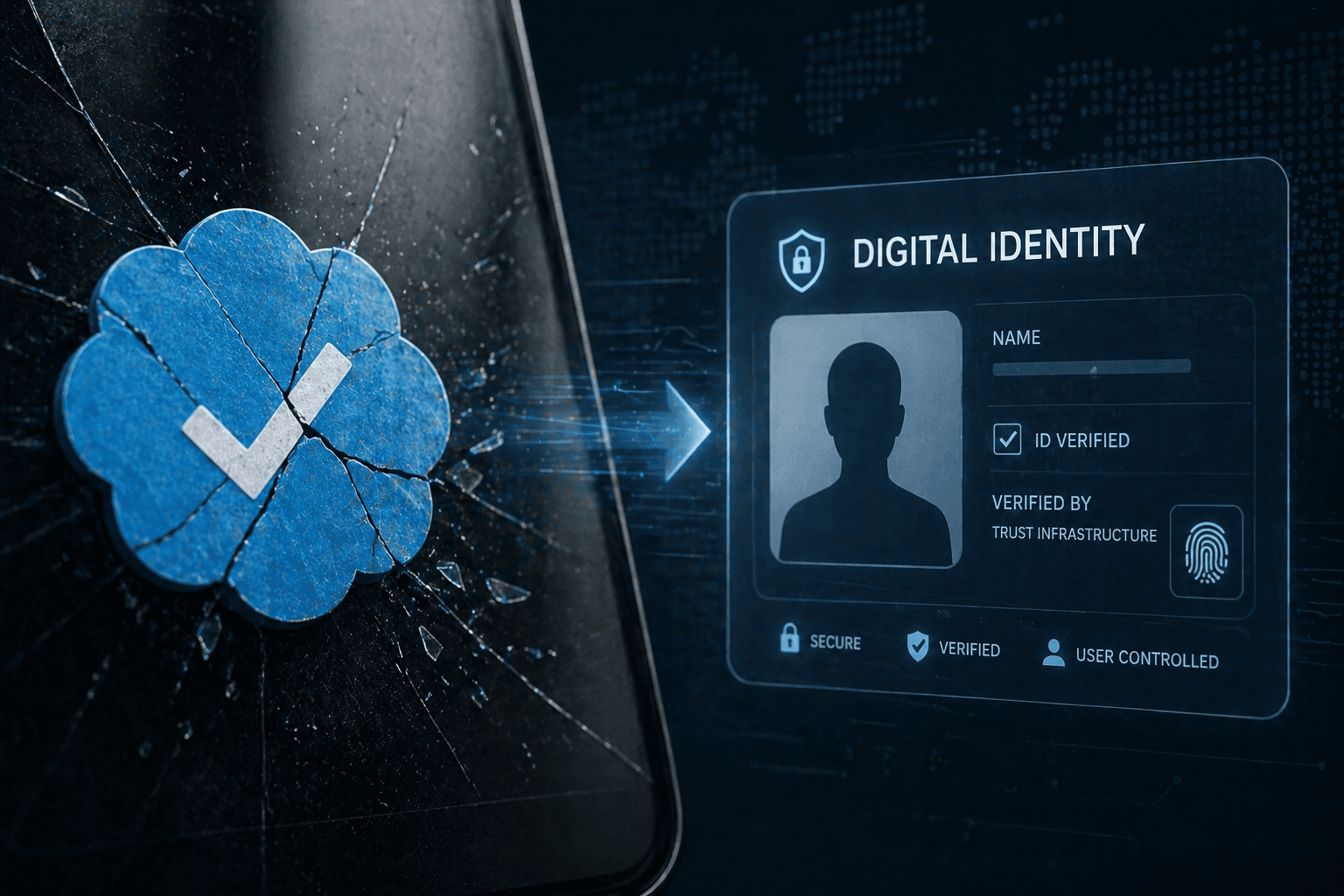
Meta Verified unlocked the blue tick for subscription holders. Instagram expanded verification to micro-creators with lower thresholds. But the real shift is the EU mandate: all Member States must offer digital identity wallets by end of 2026. Credential authority is moving — or trying to move — from platforms to governments, which raises its own questions.
Meta Verified doesn't prove you're human. It proves you have a credit card and trust Facebook with your identity data. Different thing entirely. The blue check wars ended because platforms trying to monetize authenticity exposed what it always was — a status symbol, not infrastructure.
The EU Digital Identity Wallet mandate forces the actual question: who controls credential authority? State powers? Centralized tech platforms? Or does the community build decentralized alternatives that neither can revoke?
This is the inflection point where verification shifts from platform feature to infrastructure layer. When governments mandate digital identity wallets, they're essentially saying: credential authority is too important for platforms alone. But top-down standardization rarely solves bottom-up trust problems. It creates friction in different places.
We're building human-first verified identity outside both systems. Cryptographic proof of origin that travels with you, across platforms, across communities, without permission. Not a blue check. Not a government wallet. Infrastructure that creators and communities control. That's what the alternative looks like.
The blue checkmark lost because it was never infrastructure — it was just a feature the platforms owned.
Meta Verified and EU Digital ID are solving different versions of the same wrong problem. One monetizes status. The other centralizes control. Neither answers the core question: how do you prove you're a real human voice without handing that proof to a system that can revoke it?
The answer has to be decentralized. Cryptographic proof of origin that travels with you — across platforms, across communities, without permission. That's where verified identity has to go. And that's what REAX Media is building toward.